


Chinese Dog Breeds: 6 Fascinating Breeds and Their History
https://weloveourfurryfriends.com/wp-content/uploads/2023/12/Chinese-Dog-Breeds-1024x682.jpg 1024 682 We Love Our Furry Friends We Love Our Furry Friends https://weloveourfurryfriends.com/wp-content/uploads/2023/12/Chinese-Dog-Breeds-1024x682.jpgChina has a long and fascinating history with dogs. Some breeds served as treasured companions in imperial palaces, while others worked as guardians, hunters, or versatile working dogs.
Today, breeds such as the Shih Tzu, Pekingese, Pug, Chow Chow and Chinese Shar-Pei remain closely associated with Chinese history. The Chinese Crested also has centuries of connections with China, although its precise origins are less certain than its name suggests.
If you’re considering one of these dogs, history and appearance are only part of the story.
Grooming, exercise, temperament and health can differ considerably between breeds—and some distinctive physical features come with important health considerations.
Here’s what prospective owners should know about six fascinating Chinese dog breeds.
Chinese Dog Breeds at a Glance
| Breed | General Size | Coat & Grooming | General Temperament | Important Consideration |
|---|---|---|---|---|
| Shih Tzu | Small | High grooming | Affectionate, outgoing | Flat-faced health concerns |
| Pekingese | Small | High grooming | Loyal, independent | Flat-faced health concerns |
| Pug | Small | Low-moderate grooming | Sociable, playful | Significant brachycephalic concerns |
| Chow Chow | Medium | Moderate-high grooming | Independent, reserved | Early socialisation |
| Chinese Shar-Pei | Medium | Relatively simple coat care | Loyal, independent | Breed-specific health concerns |
| Chinese Crested | Small | Specialised skin/coat care | Affectionate, lively | Hairless skin needs protection |
Breed descriptions are useful starting points, but they don’t guarantee how an individual dog will behave.
Genetics, socialisation, training, health and previous experiences all influence temperament.
1. Shih Tzu
The Shih Tzu is one of the breeds most strongly associated with China’s imperial courts.
Its ancestry is more complicated than simply saying it “originated in China”. The breed likely descended from Tibetan dogs that reached China, where Chinese imperial breeders developed the Shih Tzu we now recognise.
The American Kennel Club’s history of the Shih Tzu describes the breed’s long association with Chinese royalty, including its presence during the Ming Dynasty.
What Are Shih Tzus Like?
Shih Tzus were developed primarily as companion dogs.
They’re small, people-orientated dogs that can adapt to different types of homes, provided their physical, social and grooming needs are met.
Their long coat requires substantial maintenance when kept at full length. Many companion Shih Tzus are kept in shorter clips to make everyday grooming more manageable.
Health Considerations
The Shih Tzu’s short muzzle and flat facial structure deserve attention.
Flat-faced dogs can experience breathing, eye, dental and heat-related problems.
Don’t assume that noisy breathing or difficulty exercising is normal simply because a dog belongs to a flat-faced breed.
Best suited to: Someone looking for a small companion and prepared for regular grooming and careful attention to brachycephalic health.
2. Pekingese
The Pekingese has a stronger connection to imperial China than most breeds.
These small companion dogs were associated with China’s ruling classes for centuries.
The AKC’s history of the Pekingese traces their history in China back more than a thousand years and describes how five Pekingese were taken from the imperial palace during the Second Opium War in 1860.
Those dogs played a role in introducing the breed to Britain.
What Are Pekingese Like?
Pekingese are small but shouldn’t be mistaken for fragile ornaments.
The breed is generally described as dignified, loyal and independent.
Their long coats require regular maintenance, and their prominent eyes and shortened facial structure mean owners should pay close attention to health.
Health Considerations
Like the Shih Tzu and Pug, the Pekingese is brachycephalic.
Its flat face can be associated with breathing difficulties and other structural health concerns.
Anyone considering the breed should look beyond its distinctive appearance and research these issues carefully.
Best suited to: Someone wanting a small companion who understands the breed’s grooming requirements, independence and potential health needs.
3. Pug
Pugs have a long history in China, where they were valued as companion dogs.
Their compact bodies, curled tails, large eyes and distinctive facial expressions have made them extremely recognisable.
Pugs are often described as playful and sociable companion dogs.
But there’s something much more important prospective owners should understand.
Pugs Are a Flat-Faced Breed
The extremely shortened muzzle associated with modern Pugs can affect breathing.
Flat-faced dogs may also struggle more in hot weather and during strenuous exercise.
This matters when deciding whether a Pug is right for you.
A dog shouldn’t have to struggle to breathe simply because that appearance is considered characteristic of its breed.
Weight management is particularly important because excess body weight can place additional strain on a dog’s respiratory system and overall health.
Best suited to: Someone seeking a small companion who has carefully researched brachycephalic health and can accommodate the dog’s physical limitations.
4. Chow Chow
The Chow Chow is dramatically different from China’s smaller imperial companion dogs.
It’s an ancient, medium-sized breed with a sturdy build, thick coat and characteristic blue-black tongue.
The AKC describes the Chow Chow as an ancient all-purpose dog of China. Historical evidence resembling the breed dates back to China’s Han Dynasty.
Chows have served various roles throughout their history, including hunting, guarding and companionship.
What Are Chow Chows Like?
Chow Chows are generally associated with a more reserved and independent temperament.
They’re often deeply loyal to their family without necessarily behaving like highly social dogs with everyone they meet.
That makes early, positive socialisation particularly important.
Socialisation doesn’t mean forcing a puppy to interact with everyone. It means helping the dog gradually develop positive experiences with different people, environments and everyday situations.
Grooming and Exercise
Chows can have rough or smooth coats.
The heavily coated rough variety requires regular grooming, particularly when shedding.
Their substantial coat also means owners need to be careful during hot weather.
Best suited to: An owner who appreciates an independent dog, understands early socialisation and can maintain the breed’s coat.
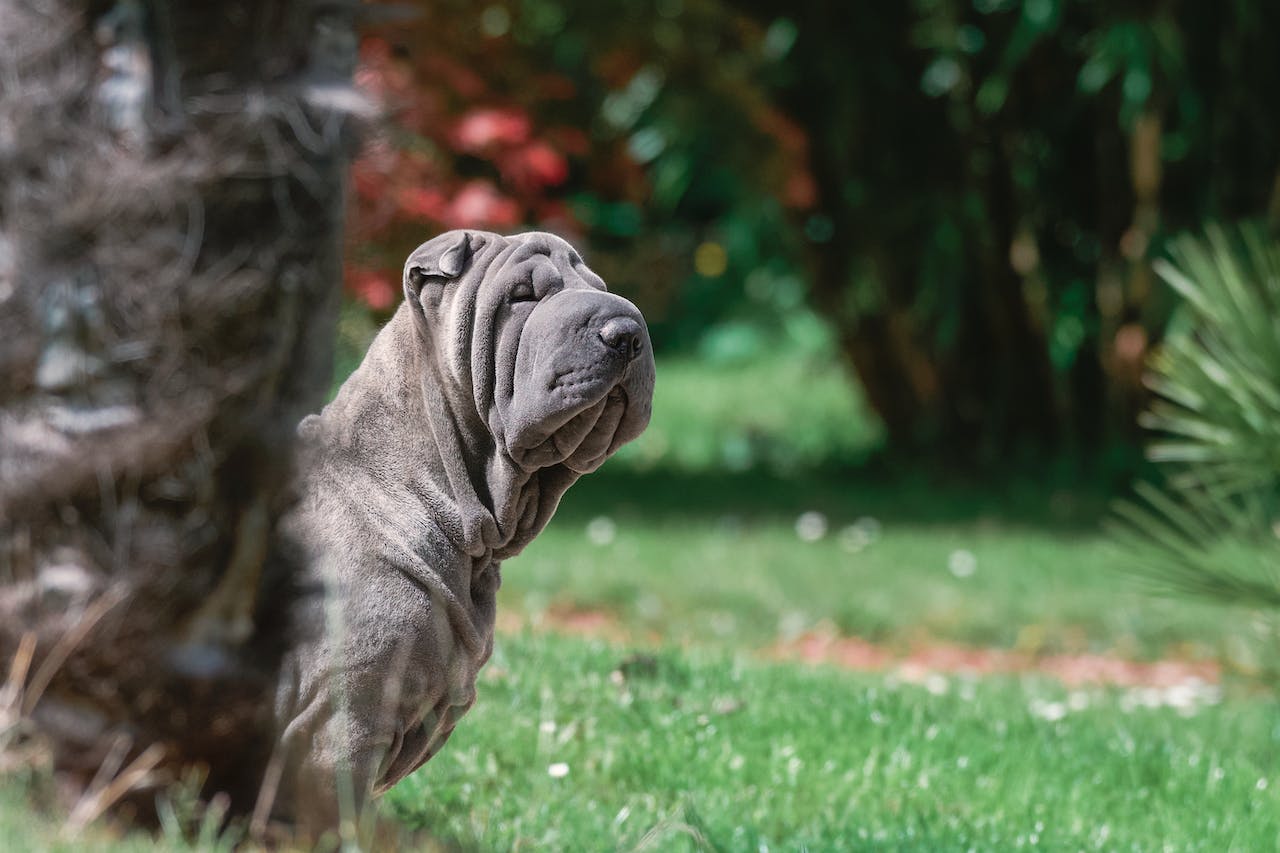
5. Chinese Shar-Pei
The Chinese Shar-Pei is another breed with deep historical connections to China.
Historical representations of wrinkled dogs resembling the Shar-Pei have been associated with ancient China, while the modern breed is especially known for its loose skin, small ears, broad muzzle and harsh coat.
The name Shar-Pei is commonly translated in reference to the breed’s distinctive “sand skin” or sandpaper-like coat.
What Are Shar-Pei Like?
The AKC describes the Chinese Shar-Pei as loyal, independent and generally reserved around strangers.
Early reward-based training and positive socialisation are therefore important for this breed.
The breed is medium-sized rather than one of China’s truly giant dogs. AKC lists an adult weight of approximately 45–60 pounds.
Health Matters More Than Wrinkles
Those famous wrinkles shouldn’t be treated purely as a cute physical characteristic.
Shar-Pei can experience several breed-related health problems, so anyone considering one should research appropriate health screening and veterinary requirements.
Responsible breeders should prioritise healthy structure and function rather than producing dogs with increasingly exaggerated physical features.
Best suited to: Someone experienced with independent dogs who is prepared to research breed-specific health concerns and provide early socialisation.
6. Chinese Crested
The Chinese Crested is one of the most visually distinctive breeds on this list.
It comes in two varieties:
- Hairless, with exposed skin and hair primarily on the head, feet and tail
- Powderpuff, with a full coat
Interestingly, the breed’s name does not reveal its complete history.
According to the AKC’s history of the Chinese Crested, its precise origin is unknown. One theory is that larger African hairless dogs were brought to China and bred down in size.
Chinese sailors are then believed to have travelled with these dogs aboard ships.
What Are Chinese Cresteds Like?
They’re small companion dogs generally known for being affectionate and lively.
The hairless variety isn’t necessarily “maintenance-free” because it lacks a full coat.
Exposed skin needs appropriate care and protection from environmental conditions.
Powderpuffs, meanwhile, require regular coat maintenance.
Best suited to: Someone looking for a small, affectionate companion and willing to understand the specialised skin or coat care required by their chosen variety.
What About the Tibetan Mastiff?
You’ll often see the Tibetan Mastiff included on lists of Chinese dog breeds.
That needs context.
The Tibetan Mastiff is historically associated with Tibet and the Himalayan region, so describing it simply as a Chinese breed can obscure the breed’s Tibetan origins and cultural history.
It’s a huge livestock guardian breed developed for a completely different role from China’s imperial companion dogs.
It can still be relevant when discussing dogs from the broader region, but it shouldn’t simply be presented as another Chinese breed without explaining that background.
What About the Tibetan Spaniel?
The same distinction applies to the Tibetan Spaniel.
Despite sometimes appearing in articles about Chinese breeds, the Tibetan Spaniel has deep historical associations with Tibet and Buddhist monasteries.
It isn’t simply a small Chinese breed.
Its historical relationship with the region is interesting, but respecting that history makes the article more accurate.
What About the Lhasa Apso?
The Lhasa Apso is another Tibetan breed frequently grouped into lists of Chinese dogs.
Its history is closely associated with Tibet, including its traditional role around monasteries and homes.
Lhasa Apsos also contributed to the ancestry of breeds that were later developed in China, which helps explain why the histories sometimes overlap.
That’s different from saying the Lhasa Apso itself originated in China.
Is the Chinese Imperial Dog a Recognised Breed?
You’ll sometimes see very small Shih Tzu-type dogs advertised as “Chinese Imperial Dogs”, “Imperial Shih Tzus”, “Teacup Shih Tzus” or similar names.
Be careful with those labels.
The Chinese Imperial Dog is not recognised by major registries, such as the American Kennel Club, as a separate breed.
Extremely small dogs marketed using terms such as “teacup” also shouldn’t automatically be considered a special or superior version of a recognised breed.
When choosing a puppy, health, responsible breeding and appropriate structure matter far more than a fashionable size label.
What Is the Kunming Wolfdog?
The Kunming Wolfdog—or Kunming Dog—is a working dog developed in China and associated particularly with military and police work.
That makes it relevant to a broader discussion of Chinese dogs.
However, it’s very different from companion breeds such as the Pug, Pekingese and Shih Tzu.
It’s a specialised working dog, not an obvious choice for the average household.
Someone interested in a Kunming Dog should research the breed’s working background, exercise requirements, availability and recognition in their own country rather than assuming it will behave like a typical companion breed.
Which Chinese Dog Breeds Are Small?
If you’re specifically interested in small Chinese or Chinese-associated breeds, the main options include:
- Shih Tzu
- Pekingese
- Pug
- Chinese Crested
Small size doesn’t necessarily mean low maintenance.
A Shih Tzu may require substantial grooming. A hairless Chinese Crested needs skin care. Pugs and Pekingese have important brachycephalic health considerations.
Choose based on the whole dog, not size alone.
Are There Large Chinese Dog Breeds?
China’s better-known larger breeds include the Chow Chow and Chinese Shar-Pei, although both are generally better described as medium-sized rather than giant dogs.
The Kunming Dog is another larger working breed developed in China.
If you’re including Tibetan breeds in a broader regional discussion, the Tibetan Mastiff is considerably larger—but its Tibetan origins should be clearly acknowledged.
Which Chinese Dog Breed Is Best for Families?
There’s no universally “best” Chinese breed for families.
Compatibility depends on the individual dog as well as the household.
Consider:
- Children’s ages and behaviour around dogs
- The dog’s individual temperament
- Exercise requirements
- Grooming
- Training needs
- Existing pets
- Time spent at home
- Health considerations
- Your experience with dogs
Don’t assume that every Shih Tzu or Pug will automatically love children, or that every Chow Chow will be aloof.
Breed characteristics describe tendencies, not guarantees.
Children should also learn how to interact respectfully with dogs, and young children and dogs should be appropriately supervised.
How to Choose the Right Chinese Dog Breed
Start with your lifestyle rather than appearance.
Consider Grooming
Long-coated breeds such as Shih Tzus and Pekingese require considerable coat maintenance.
Chow Chows also need regular grooming, while the hairless Chinese Crested has specialised skin-care requirements.
Think About Exercise
Exercise requirements aren’t determined by size alone.
Research what the individual breed needs and remember that age, health and personality also affect appropriate activity levels.
Research Health Before Choosing a Breed
This step is particularly important with dogs selected for exaggerated physical characteristics.
Flat faces, excessive skin folds, unusual body proportions and other distinctive features can sometimes lead to health problems.
Choose breeders who prioritise health rather than increasingly exaggerated appearance.
Look Beyond Breed Stereotypes
Words such as “loyal”, “friendly”, “independent” and “protective” describe broad tendencies.
They don’t tell you exactly how your future dog will behave.
Early experiences, socialisation, reward-based training, environment and health all contribute to behaviour.
Consider Adoption Too
Purebred dogs can sometimes enter shelters or breed-specific rescue organisations.
You don’t necessarily need to purchase a puppy to find a particular type of companion.
An adult dog’s established personality may also make it easier to judge whether the individual fits your household.
The Bottom Line
Chinese dog breeds reflect centuries of very different relationships between people and dogs.
The Pekingese, Pug and Shih Tzu have strong associations with China’s imperial courts. The Chow Chow and Chinese Shar-Pei represent ancient Chinese breeds with very different working histories. The Chinese Crested has strong historical connections with China even though its precise geographic origin remains uncertain.
Other dogs commonly added to “Chinese breed” lists need more explanation.
The Tibetan Mastiff, Tibetan Spaniel and Lhasa Apso have Tibetan histories, while the Chinese Imperial Dog isn’t recognised by major registries such as the AKC as a separate breed.
If you’re choosing one of these dogs, don’t make the decision based solely on appearance or history.
Consider health, temperament, grooming, exercise, training and the needs of the individual dog.
The right breed isn’t simply the one you find most beautiful—it’s one whose needs you can responsibly meet throughout its life.

