


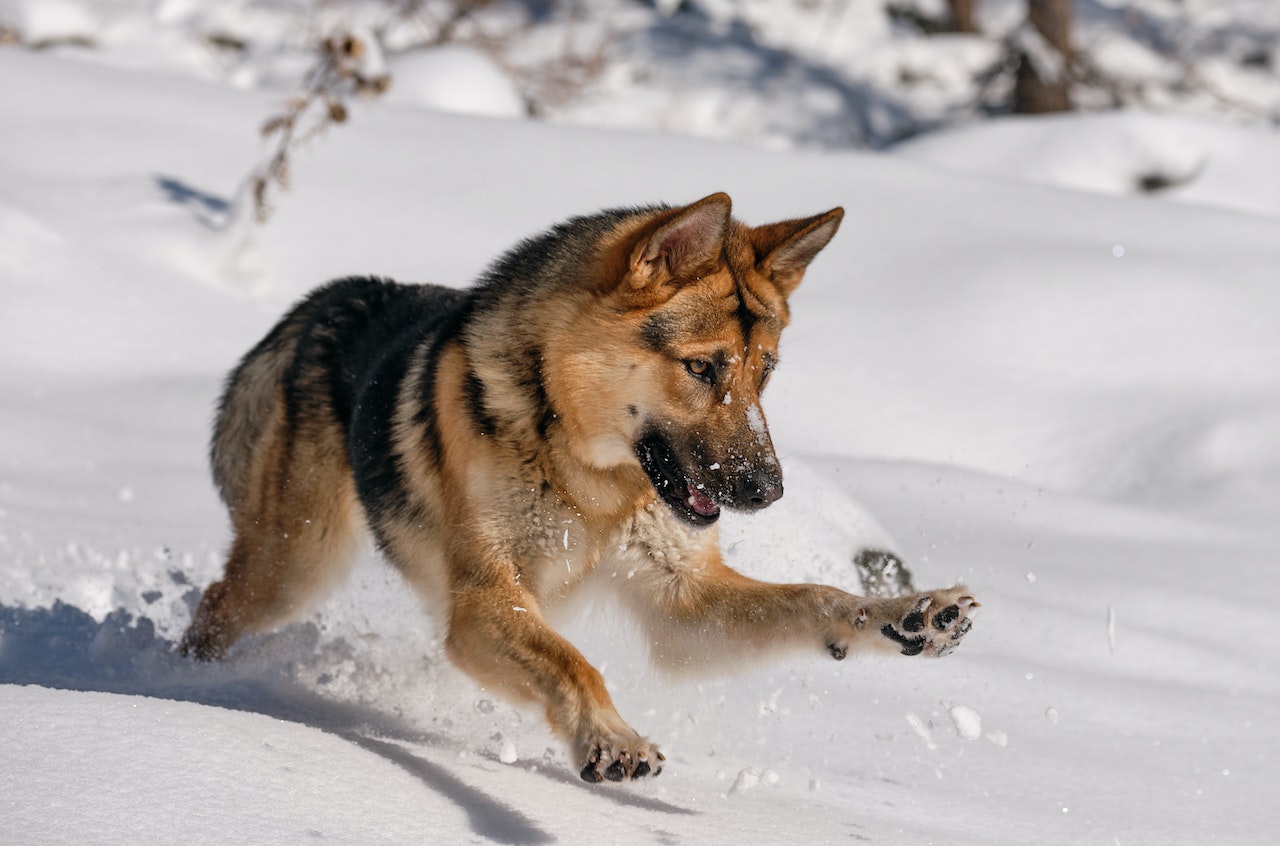
German Commands For Dog Training: Basic Commands
https://weloveourfurryfriends.com/wp-content/uploads/2023/04/German-Dog-German-Commands-Basic-Training-Commands-to-Teach-Your-Pup-1024x677.jpg 1024 677 We Love Our Furry Friends We Love Our Furry Friends https://weloveourfurryfriends.com/wp-content/uploads/2023/04/German-Dog-German-Commands-Basic-Training-Commands-to-Teach-Your-Pup-1024x677.jpgGerman dog training commands are popular with dog owners, working-dog handlers and trainers who want short, consistent verbal cues.
You may already recognise words such as Sitz (sit), Platz (down) and Fuß (heel), especially if you’ve watched German Shepherd obedience training.
But German commands aren’t only for German Shepherds. Any dog can learn them, regardless of breed or age.
The important thing isn’t the language itself. It’s teaching your dog to associate each word with a particular behaviour through repetition, consistency and positive reinforcement.
Here’s a practical guide to 15 German dog commands, including what they mean, how to pronounce them and how to teach them.
German Dog Training Commands at a Glance
| German Command | English Meaning | Approximate Pronunciation |
|---|---|---|
| Sitz | Sit | Zits |
| Platz | Down | Plahts |
| Hier | Come / Here | Heer |
| Bleib | Stay | Blybe |
| Fuß | Heel | Foos |
| Warte | Wait | Var-tuh |
| Aus | Drop it / Release | Ows |
| Lass es | Leave it | Lahs ess |
| Steh | Stand | Shtay |
| Nein | No | Nine |
| Gib Laut | Speak / Bark | Gip lowt |
| Ruhe | Quiet / Silence | Roo-uh |
| Apport | Retrieve / Fetch | Ah-port |
| Vorwärts | Forward | For-vairts |
| Pfote | Paw | Pfoh-tuh |
Pronunciations are approximate English-language guides. German sounds vary, and dogs can learn cues even when your pronunciation isn’t perfect, provided you use them consistently.
1. Sitz — Sit
German command: Sitz
English meaning: Sit
Sitz is one of the easiest German commands to introduce because sitting is a natural behaviour for most dogs.
How to Teach Sitz
- Hold a small treat close to your dog’s nose.
- Slowly move it slightly upward and backward.
- As your dog’s head follows the treat, its hindquarters may lower.
- Reward your dog as soon as it sits.
- Once the movement is reliable, say “Sitz” just before giving the hand signal.
Avoid pushing your dog’s hips down. Let your dog learn the movement voluntarily.
2. Platz — Down
German command: Platz
English meaning: Lie down
Platz is useful when you want your dog to settle into a lying position.
How to Teach Platz
Start with your dog standing or sitting.
Hold a treat near its nose and slowly lower it toward the floor.
If your dog follows the treat and lies down, reward immediately.
Some dogs need more time to understand this movement. Practise on a comfortable, non-slip surface.
Don’t physically force your dog into a down position.
Once your dog reliably follows the movement, introduce the verbal cue “Platz.”
3. Hier — Come
German command: Hier
English meaning: Come / Here
Recall is one of the most important skills you can teach your dog.
A reliable response to “Hier” can help you call your dog away from distractions or potentially dangerous situations.
How to Teach Hier
- Begin indoors or in a secure, quiet area.
- Move a short distance from your dog.
- Say “Hier” in a cheerful voice.
- Encourage your dog to approach.
- Reward generously when it reaches you.
Gradually practise at greater distances and around mild distractions.
Never punish your dog after it comes to you, even if it took longer than expected.
For outdoor practice, use a suitable long line until recall is reliable. No dog should be assumed safe off-leash simply because it knows a recall word.
4. Bleib — Stay
German command: Bleib
English meaning: Stay
Bleib asks your dog to remain in a position until released.
How to Teach Bleib
Ask your dog to sit or lie down.
Say “Bleib,” pause briefly and reward your dog for remaining in position.
Initially, stay close.
Increase the duration gradually before adding distance or distractions.
Use a separate release cue, such as “Frei” (free), to communicate when your dog can move.
Avoid increasing distance, duration and distractions all at once.
5. Fuß — Heel
German command: Fuß
English meaning: Heel
Fuß asks your dog to walk in a position beside you.
In formal obedience, heelwork often requires a precise position and sustained attention.
For everyday walks, however, relaxed loose-leash walking is usually more practical than expecting a dog to maintain a strict heel throughout the entire outing.
How to Teach Fuß
Begin in a quiet environment.
Reward your dog for standing or walking beside your chosen leg.
Take one or two steps and reward again if your dog stays in position.
Gradually increase the number of steps before rewarding.
If your dog pulls, pause and help it return to the desired position rather than jerking the leash.
For more guidance, read our article on understanding the heel command in dog training.
6. Warte — Wait
German command: Warte
English meaning: Wait
Warte is useful for short pauses, such as waiting before going through a doorway.
Unlike a formal stay, a wait cue may simply mean “pause until I give you permission to continue.”
How to Teach Warte
Ask your dog to pause before an open doorway or another manageable situation.
Reward the pause, then give a release cue.
Gradually extend the waiting period.
Practise first in safe, low-distraction environments rather than beside busy roads or open gates.
7. Aus — Drop It
German command: Aus
English meaning: Drop it / Release
Aus is commonly used to ask a dog to release something already in its mouth.
This command is different from preventing the dog from picking something up.
How to Teach Aus
Offer your dog a suitable toy.
While it’s holding the toy, present a desirable treat.
When your dog releases the toy to take the treat, reward it.
With repetition, introduce “Aus” just before the release.
You can sometimes give the toy back after rewarding. This helps teach your dog that releasing an object doesn’t always mean losing it permanently.
Avoid forcibly pulling objects from your dog’s mouth during routine training.
If your dog guards objects or shows aggression when approached, seek help from a qualified reward-based trainer or veterinary behaviour professional.
8. Lass es — Leave It
German command: Lass es
English meaning: Leave it
Lass es asks your dog not to interact with something.
This can be useful when your dog notices dropped food, rubbish or an inappropriate object.
How to Teach Lass es
Hold a treat inside your closed hand.
Allow your dog to investigate without opening your hand.
When it stops trying to access the treat, reward it with a different treat from your other hand.
Gradually introduce the cue “Lass es.”
Later, practise with an item on the floor while keeping it safely covered or out of reach.
The goal is to teach your dog that disengaging from one item leads to something rewarding.
9. Steh — Stand
German command: Steh
English meaning: Stand
Steh asks your dog to stand on all four paws.
It’s useful for grooming, veterinary examinations and everyday handling.
How to Teach Steh
Begin with your dog sitting.
Hold a treat near its nose and move it gently forward.
Reward when your dog rises into a standing position.
Once the behaviour is predictable, you can introduce “Steh.”
Keep early sessions short, especially if your dog is uncomfortable standing for extended periods.
10. Nein — No
German command: Nein
English meaning: No
Nein is a common German word, but it doesn’t automatically tell your dog what behaviour you want instead.
For example, saying “Nein” when your dog jumps on visitors may interrupt the moment without teaching an alternative.
A more useful approach is to reward a specific behaviour, such as keeping all four paws on the floor or sitting to greet someone.
If you use “Nein” as an interruption cue, teach it calmly and consistently.
Avoid shouting, intimidation or physical punishment.
11. Gib Laut — Speak
German command: Gib Laut
English meaning: Speak / Bark on cue
Gib Laut asks your dog to bark when prompted.
It’s sometimes used in structured training and dog sports, although it’s not an essential skill for every household pet.
How to Teach Gib Laut
If your dog naturally barks in a predictable, non-stressful situation, mark and reward an appropriate bark.
Introduce the cue “Gib Laut” as your dog begins to understand the behaviour.
Avoid deliberately frightening or frustrating your dog to make it bark.
If your dog already struggles with excessive barking, focus on addressing the underlying behaviour before teaching barking on cue.
12. Ruhe — Quiet
German command: Ruhe
English meaning: Quiet / Silence
Ruhe can be used as a cue for stopping barking or becoming quiet.
Some trainers use other German words or phrases for the same purpose.
The exact word matters less than the behaviour you’ve taught your dog to associate with it.
How to Teach Ruhe
Begin in a low-distraction environment.
When your dog naturally pauses barking, mark the quiet moment and reward it.
Gradually introduce the cue and increase the duration of the quiet behaviour.
Don’t expect a word alone to resolve barking caused by fear, separation distress or another underlying problem.
Those situations require addressing the cause, not simply suppressing the sound.
13. Apport — Fetch
German command: Apport
English meaning: Retrieve / Fetch
Apport is associated with retrieving an object and bringing it back to the handler.
How to Teach Apport
Start with a toy your dog enjoys.
Reward your dog for interacting with it, picking it up and moving toward you.
Gradually shape the behaviour into returning the object.
If your dog enjoys fetching, use short sessions with an appropriately sized toy.
Avoid repetitive, high-intensity fetching if your dog has joint problems or other conditions that make the activity unsuitable.
14. Vorwärts — Forward
German command: Vorwärts
English meaning: Forward
Vorwärts means “forward.”
It’s not the German word for “speak.”
The command may be used in particular working-dog activities, but ordinary pet owners can also teach a forward movement cue.
How to Teach Vorwärts
Choose a safe, clear direction.
Encourage your dog to move forward a short distance.
Reward the movement, then introduce “Vorwärts.”
Start with a simple behaviour and increase the distance gradually.
Don’t use the cue to send your dog into unsafe or unfamiliar situations.
15. Pfote — Paw
German command: Pfote
English meaning: Paw
Pfote is a useful trick for owners who enjoy teaching their dogs simple behaviours.
How to Teach Pfote
Begin with your dog sitting comfortably.
Offer your hand and reward any voluntary movement of a front paw toward it.
Gradually shape that movement into placing the paw in your hand.
Introduce “Pfote” once your dog understands the action.
Don’t pull or force your dog’s leg into position.
Why Do Dog Trainers Use German Commands?
German commands are associated with the history of working-dog training, particularly in breeds such as German Shepherds.
They are also used in some obedience and dog-sport traditions.
But German isn’t inherently easier for dogs to understand than English.
Dogs learn to associate sounds and signals with behaviours and their consequences.
A dog can learn “Sitz,” “sit” or another consistent cue for the same action.
What matters most is that the handler teaches the cue clearly and rewards the correct response.
Can Any Dog Learn German Commands?
Yes.
German commands aren’t limited to German Shepherds, Dobermans or other breeds associated with Germany.
A Labrador Retriever, Poodle, mixed-breed dog or rescue dog can learn them too.
You can also teach German commands to an adult dog that previously learned English cues.
Introduce the new word alongside the familiar behaviour, reward successful responses and gradually phase out the old verbal cue if you want to replace it.
Tips for Teaching German Dog Commands Successfully
Use Positive Reinforcement
Reward behaviours you want to see more often.
Depending on your dog, rewards might include food, toys, play or access to a favourite activity.
The American Veterinary Society of Animal Behavior recommends reward-based methods for dog training.
Teach One Cue at a Time
Avoid introducing several unfamiliar commands in the same session.
Start with one simple behaviour and practise it until your dog understands.
Keep Sessions Short
Several brief training sessions can be more productive than one long, frustrating session.
End while your dog is still engaged.
Reward at the Right Moment
Reward your dog as soon as it performs the behaviour you’re teaching.
A marker word such as “Yes” or a clicker can help identify the precise behaviour that earned the reward.
Practise in Different Environments
A dog that responds perfectly in the living room may struggle in a busy park.
Gradually practise around new sights, sounds and distractions.
Don’t assume a cue is fully learned until your dog can respond reliably in the environments where you need it.
Don’t Rely on a Harsh Tone
Your dog doesn’t need to be intimidated to understand a German command.
Clear communication, appropriate rewards and consistent practice are more useful than shouting or using an aggressive voice.
Frequently Asked Questions
What Is the German Command for Sit?
Sitz is the German command for sit. It’s approximately pronounced “zits.”
What Is the German Command for Come?
Hier means here and is commonly used as a recall cue. Komm is another German word meaning come.
What Does Fuß Mean in Dog Training?
Fuß means heel. It asks the dog to walk in a position beside the handler.
What Is the German Command for Drop It?
Aus is commonly used to ask a dog to release an object from its mouth.
What Is the German Command for Leave It?
Lass es means leave it. It can be taught as a cue to disengage from something before picking it up.
What Is the German Command for Quiet?
Ruhe can be used as a quiet cue. Some trainers use different words, so consistency is more important than choosing one universal term.
Are German Commands Better Than English?
No language is inherently better for dog training.
Dogs learn through associations, repetition and reinforcement. The best language is one you can use consistently.
What German Commands Should You Teach First?
Start with Sitz (sit), Platz (down), Hier (come), Bleib (stay) and Lass es (leave it).
These provide a useful foundation for everyday communication and safety.
The Bottom Line
German commands can be a practical and enjoyable way to train your dog, but the words themselves aren’t what make training effective.
Start with simple cues such as Sitz, Platz and Hier. Reward the behaviour you want, practise consistently and gradually introduce more challenging situations.
Most importantly, remember that a well-trained dog does not respond to the loudest voice—it’s one that understands what you’re asking and has learned that responding is worthwhile.
Whether you choose German, English or another language, clear communication and reward-based training are the foundation of success.

